Put the money back
What does money mean to you? Not in the sense of the definition of money. What does it symbolize to you? Being in my 20’s and seeking to build the foundation of a life, something I’ve learned is that in interpersonal relationships, views of money can differ massively. Understanding what money means to someone will help you understand them as a person.
As the child of two West African immigrants, there were several cultural differences not only between my classmates and me, but also my parents. I’m grateful that my parents sacrificed to create a life for their five children in America, but I also had to be keenly aware of the things they didn’t know as outsiders of the culture. I ate differently from my American friends, dressed differently, talked with my family differently. We even shopped for groceries differently…
There were two things my parents couldn’t do without when we went to the grocery store. The first was calling cards. These were small cardboard pieces of paper that allowed them to make phone calls to their families back home. It amazed me that entering the right digits on a call pad enabled them to be connected with people continents away. They would talk for hours. I could tell they missed home. After my grandmothers left America after brief visits when I was a toddler, I never saw them again, but I heard their voices after my parents performed the ritual of grabbing the cards and punching in the digits.

The second was nearly constant trips to Western Union. Before the age of Venmo, Zelle, Remitly, or any other money transfer software, people had to physically go to a store front to send money, either across the state, country, or even the world. I was old enough to know that my parents were sending money to their families in Benin, and I was old enough to observe that it was something that they did often. I had no idea how much it was, but I knew it happened enough to add up. In 2025, the World Bank estimated that Beninese immigrants sent nearly $300M USD back to the country.
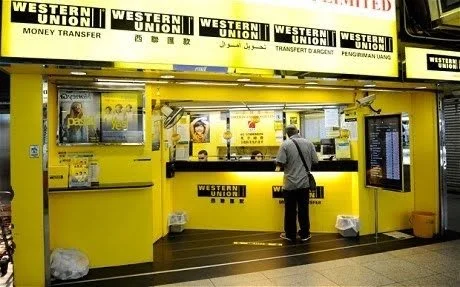
Western Union and companies like it participate in what is called the “remittance economy”, where people who are working elsewhere in the world send money back to where they’re originally from. The term remit has a french root, and literally translates to “put back”.
There’s a generational divide that exists between immigrants, and their first generation children born in the country. My parents had five kids, and that means they have five opportunities to observe how the next generation will manage. One of the realities of that generational divide that exists is how we think about or see money. In my twenties, as I got my first job and began my career, I read as much as I could about finances to make up for what my American friends knew and I didn’t.
For one person, money can mean enjoyment, while for the other, it can mean safety. This divide can cause strife, or accord. Generationally, I’ve come to understand that immigrants and their children tend to have two different views of money. I came to understand this more fully when I was watching a video about how wealthy Igbo people in Nigeria have adopted what some might consider a peculiar habit. In Nigeria, it’s not rare to come across neighborhoods of enormous mansions that sit empty for most of the year. They’re as expensive as they look, sometimes costing up to $1M to build, and tens thousands of dollars to maintain every year. There’s a saying among the Igbo people, that if you made money abroad and didn’t spend it in your village, you didn’t really make any money. In this way, we understand the concept of money for one of Nigeria’s most populous tribes. Money is a means of demonstration. But, are these Nigerians all that different from the wealthy New York bankers with summer homes in the Hamptons, who only for three weeks a year host their friends and demonstrate their wealth?

I was talking to my father about this concept. He told me that there’s a similar saying in Benin. Something along the lines of “may the money you make come flowing back”. I don’t think my father sees money in the wrong way. I just don’t think my father and I see money in the same exact way… Growing up as a middle class first generation immigrant in a place where my friends were talking about their college savings, and buying stocks with their Bar Mitzvah money, I began to see money as a means of catching up, almost like patching a hole in a leaking roof. That’s not wrong, or right. It’s just what I know.
In Benin where my father came from, you can count on one hand the number of scholars who had the opportunity to leave the country and come to America and start a career that has proven fruitful. He’s done well for himself. He is world renowned, and I’m proud of him. I also know he probably feels a bit of guilt about that, like he was one of the lucky ones. The title of his memoir speaks to that, “Fortune's Favored Child”. I wonder what happened to fortunes unfavored children. Money meant sparing the unfortunate, even if it meant potentially overextending yourself.
I know that he feels grateful for the opportunity that he was given, that so many others weren’t, and I think that’s exactly how he sees money… As something to be “put back”.