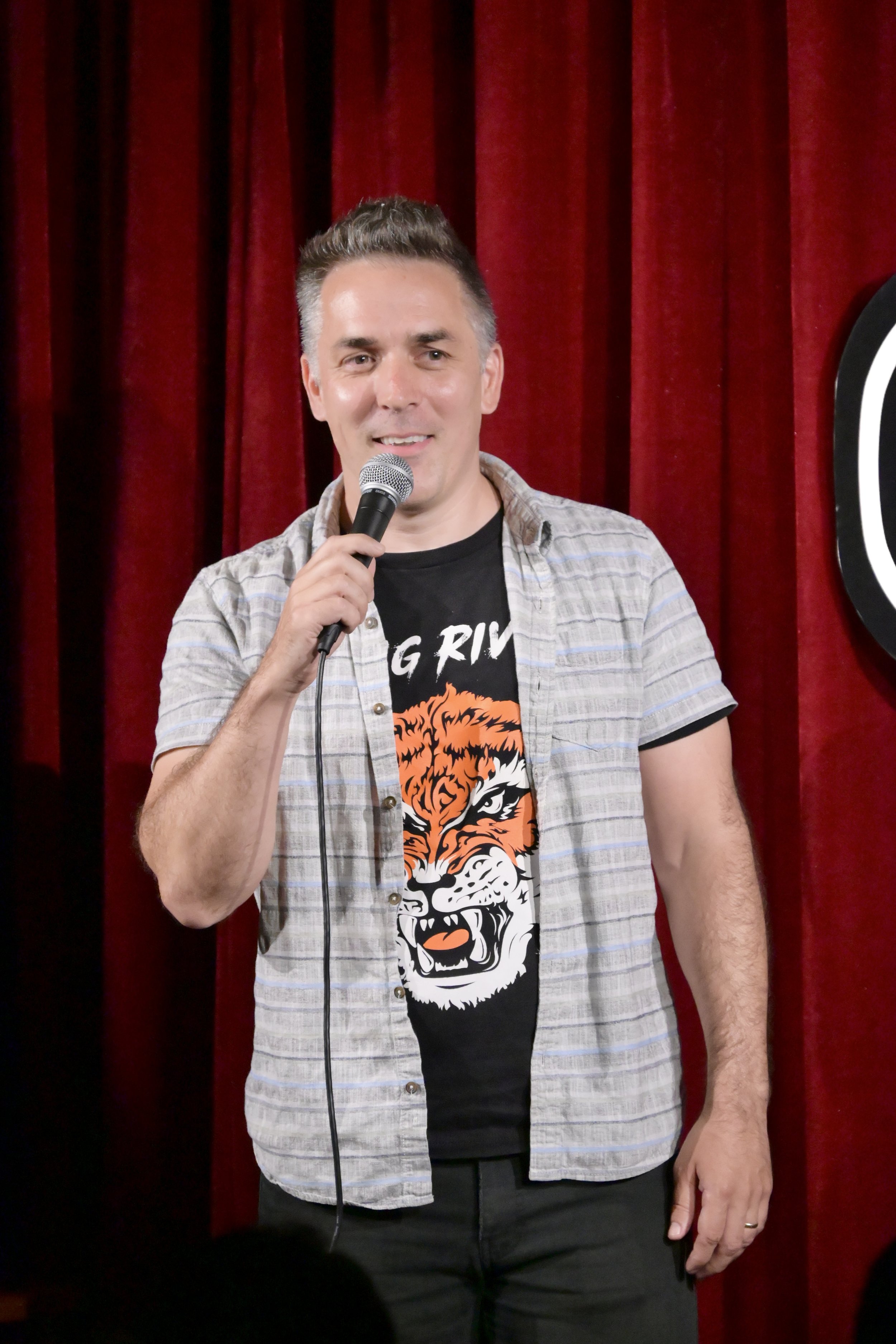
Stand-up comic and writer Drew Fralick won both the China International Comedy Competition and the Hong Kong International Comedy Festival Competition. He performs in both English and Mandarin Chinese and was the first foreign comic to appear on China's hit comedy series "80's Talkshow". He was previously the creator of HaHa Houseparty and the Joke Gym Detroit. Drew currently lives in Denver, USA where he is writing a doctoral dissertation on the intersection of comedy and religion.
current project
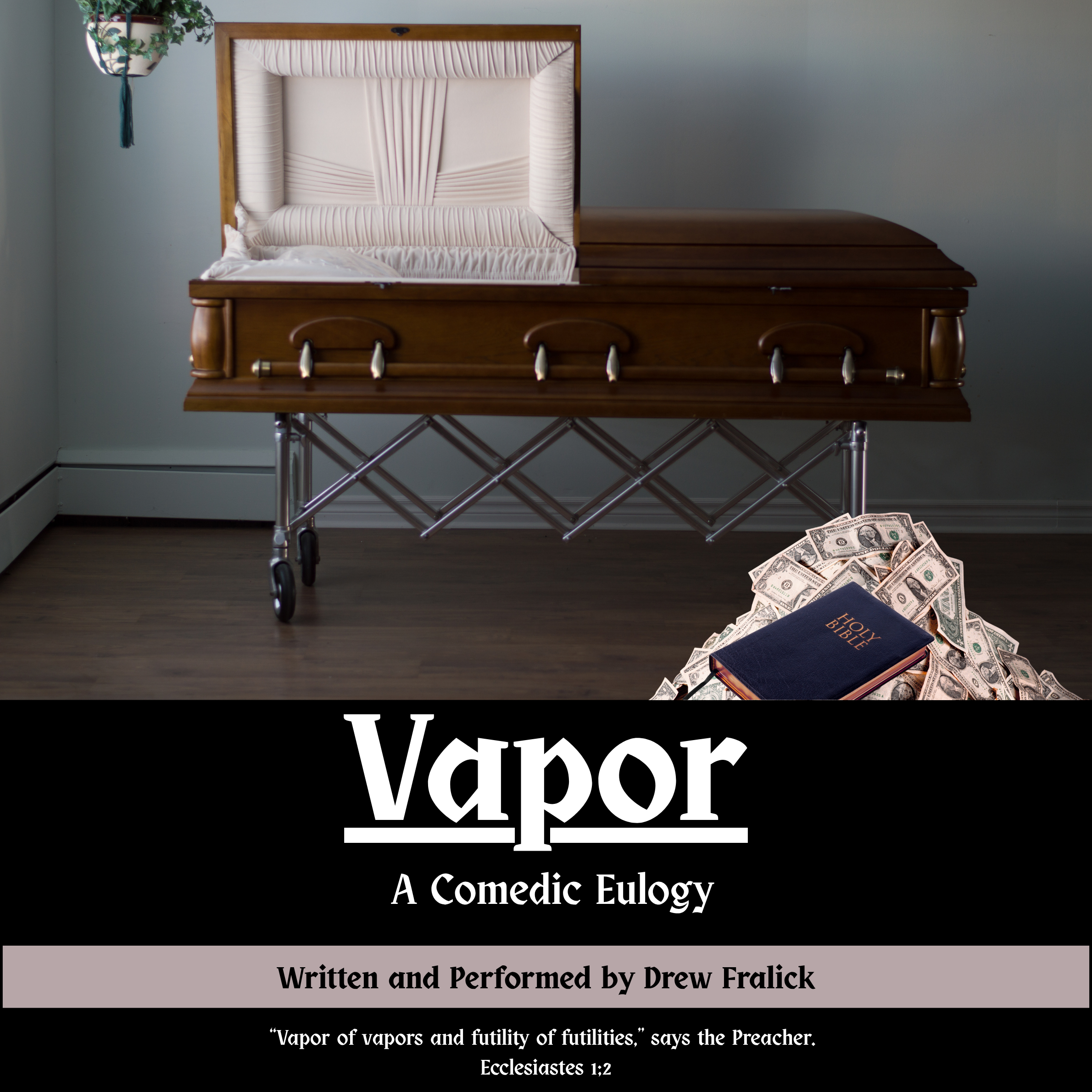
vapor: a comedic eulogy (2026)
Denver, CO: This show is written as part of my doctoral dissertation. Theologians, philosophers, and psychologists have debated humor and laughter for thousands of years and there are many psychological theories of humor as well as theologies of laughter. This project explores the APPLICATION of humor theories and theologies. If you’d like to come watch and participate I have multiple shows this fall in Denver, Detroit, and Cleveland. RSVP below.
past projects
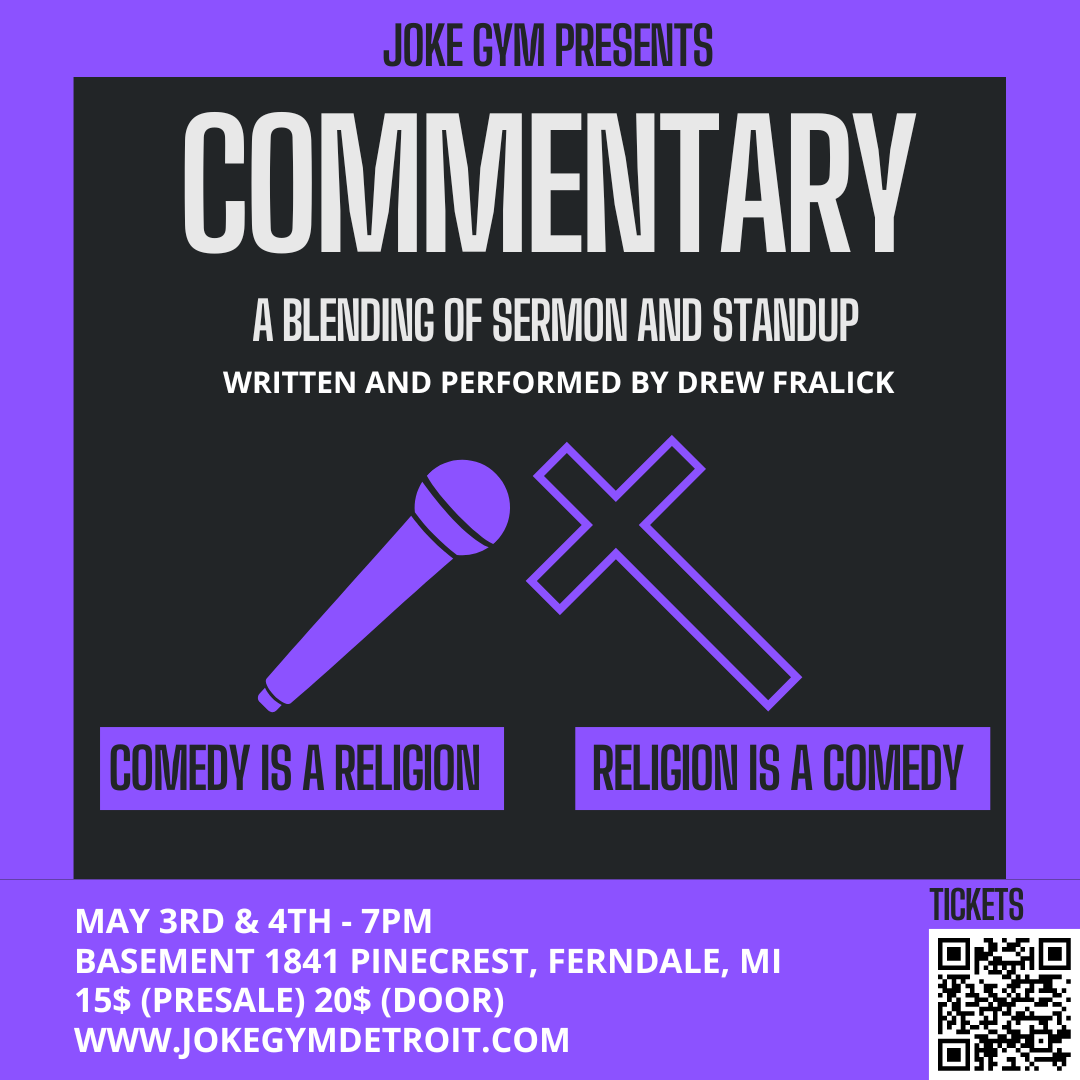
Commentary: A blending of sermon and standup (2025)
In this performance piece I attempted to blend the genres of sermon and standup comedy, not only in delivery but in method of preparation. This piece is divided into two 45 minute sections, centering on a biblical-comedic exegesis of the Ten Commandments from Exodus chapter twenty. Act 1 of Commentary is a critique of the standup comedy industry in general and specifically comedians who claim to “not be religious”. Because we all worship something by giving it our time, money and attention, every person is inherently religious. By positing that “comedy is a religion” I present the “Ten Commandments of the Religion of Comedy”, a spoof of the ten commandments through the lens of values from the comedy industry.
The second half of Commentary explores the idea that “religion is a comedy”, and this section begins to point towards what the current project (Vapor) partially seeks to accomplish - biblical exegesis using the artistic tools of comedy. As mentioned above, good comedy seeks to uncover contradiction in a foolish way that is not seen as threatening. Laughter primes the mind for disruption of our rigid thought patterns and beliefs. It paves the way for thinking and acting differently.
the joke Gym (2022-2025)
Detroit, MI: We built a comedy club in the basement of our fully functioning church where we carried out a whacky spiritual experiment. “Was comedy a religion?” “Was religion a comedy?” These and other questions we attempted to answer every week at The Joke Gym Detroit. Out of this environment emerged a close knit community of comics and the one man show “Commentary: A Blending of Sermon and Standup”.
Haha Houseparty (2018-2021)
Detroit, MI: HaHa House Party’s motto was “high quality standup comedy, coming to a basement near you.” To host these events we turned the unfinished basement of our rental house into a small black box comedy venue. Then it was run like an AirBnB for comedians. Comics could fly out from New York, L.A., or come from elsewhere in the midwest and crash with us while headlining a show in the evening downstairs. Tickets to HaHa Houseparty were ten dollars, which included all you could drink Costco boxed wine. Christ turned water into wine and we turned ten dollars into a fun night, so not far off.
These parties got pretty rowdy. They were a gathering of diverse folks and afterwards people would hang and we would have incredible discussions about the nature of life, death, and a whole number of topics. HaHa Houseparty showed me the power of comedy to bring different people together in one space to find connection and meaningful interaction.
Kungfu komedy (2010-2018)
Standup was a brand new phenomenon when Kungfu Komedy (KFK), which would later become China’s first comedy club, was started by Turner Sparks and Andy Curtain. KFK grew and in those early years we moved venues and began touring to major cities outside of Shanghai like Beijing, Hong Kong, Nanjing, Wuxi, Beijing, Hefei. As the scene was growing, so were our skills as individual comedians. It was a highly unusual situation, a group of comics who were all brand new to the form, working together and growing the platform in a foreign land that was completely virginal when it came to standup comedy. I was lucky to be invited into this group at its early stages of formation. Our little group would regularly spend time together writing or just hang out. Often the regular practice of standup comedy is a solitary endeavour, carried out by lone wolves in dimly lit rooms but ours was a community of friends in dimly lit rooms. I made lifelong friends from that period that I am still close with to this day.