Not exactly what I had in mind
Growing up in America, I had two images of Africa in my mind. One was overly bright, the other was utterly bleak. The whole continent alternated between The Lion King and the plot of a Compassion International promo video.
One minute it’s intense sunshine, bright colors, African choirs singing in tribal tongue. As baby Simba is held up for everyone to look at there’s Antelopes, Gazelles, Zebras and Baboons bowing in humble admiration. It’s all drums and smiles and shaking jewelry. Even Elton John is there! (Perhaps one of the least African people Western Civilization has produced in decades, but we love him to pieces)
A little later the whole scene changes. Now it’s ungodly hot and everywhere is flies, untreated tumors and strange situations. Sad, somber music plays with some slow motion shots of kids wandering down a dusty road. The kids play soccer with an old Christmas ornament somebody from Indiana thoughtfully donated to the cause. Pathetic hopelessness permeates the whole scene. But the pace of this video picks up with the arrival of help and volunteers in matching T-shirts. The soundtrack turns upbeat as bowls of rice and beans roll in. It’s all smiles and new backpacks and sharpened pencils until the company logo drops, along with info on how to make a donation.
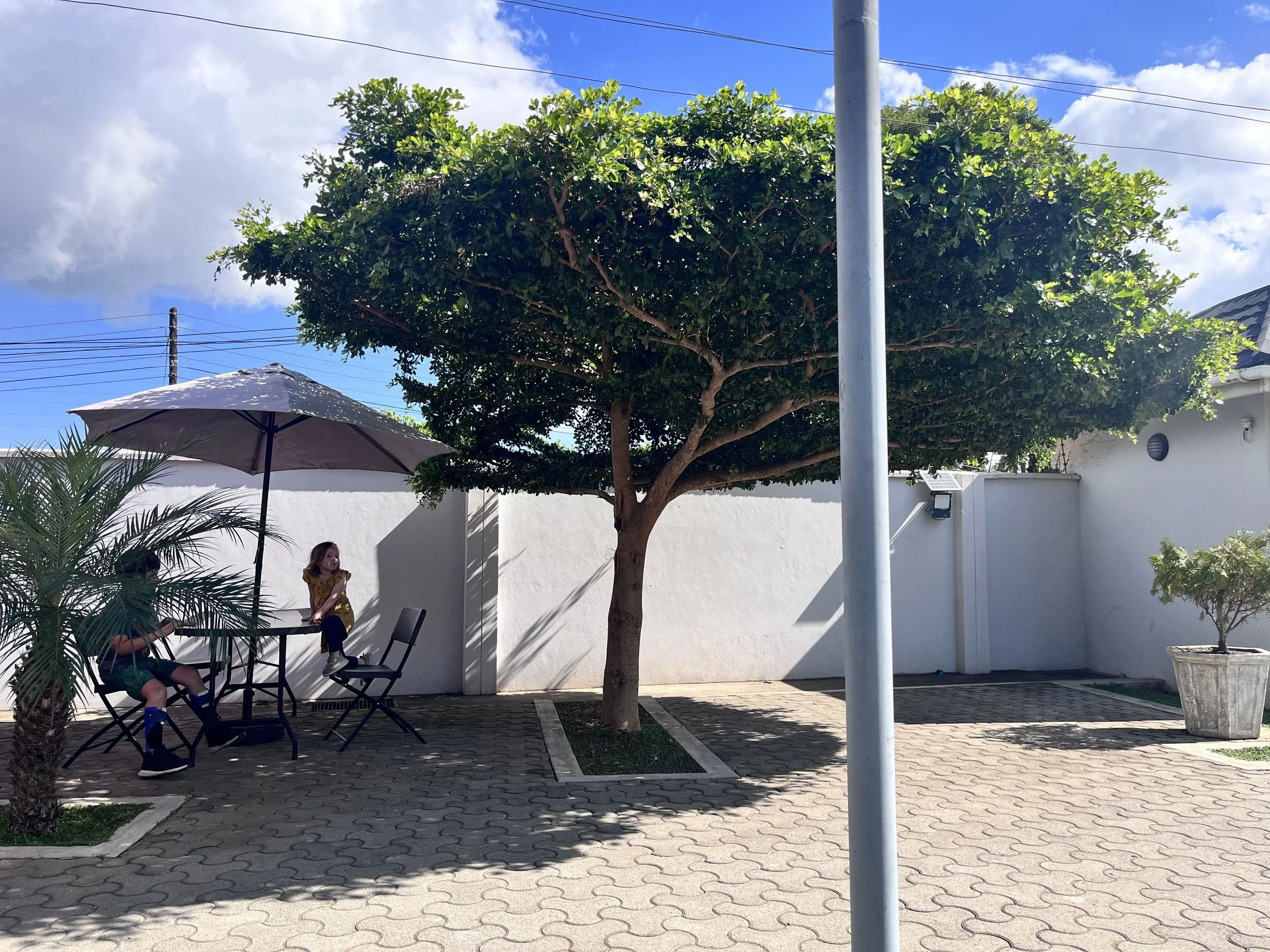
Abner and Zipporah waiting out front for our cab
I am woefully unqualified to comment on the continent of Africa, the country of Malawi, or the city of Blantyre. For the past week I have mostly been a clueless tourist at the hotel. But surely we can say reality is more complex than these two images we’ve heavily leaned on.
That’s not to say there’s NO truth in either of these images. For example there is a certain brightness I’ve noticed so far. Malawi’s nickname is “the warm heart of Africa”, given because of how famously friendly people are. It’s basically their version of the Midwest, but more so. The level of sociality here is the most stark difference you’ll notice as you step off the plane and come into town. People are talking to one another a lot. It’s jarring coming from America where our interactions with strangers are now very wooden and guarded. We are on our phones a ton, causing us to be socially out of shape. The environment in Malawi makes me seriously question whether social anxiety disorder exists in this country.
And there is that bleakness as well. A lot of people here are struggling to make ends meet. If you think that gas prices are high where you are, consider that since the war in Iran started gas prices in Malawi have shot up to $11 a gallon and you will likely cue for hours to get to the pump. In 2025 Malawi ranked as the world’s 6th poorest country (https://gfmag.com/data/economic-data/poorest-country-in-the-world/) and despite relative political stability it remains vulnerable to climate change with food insecurity being widespread.
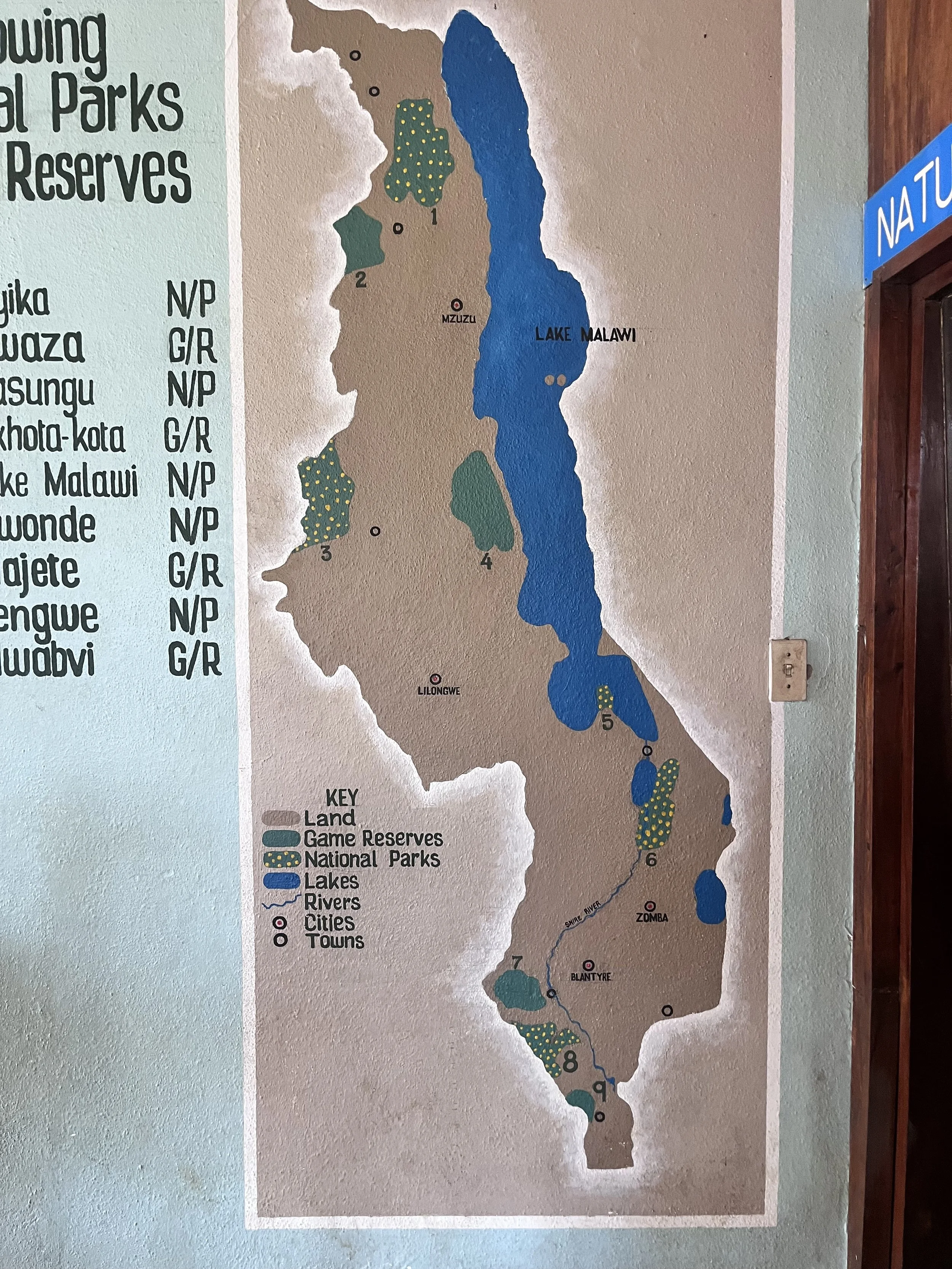
Map of Malawi
In the mornings here I do homeschool with my kids. At the end of each week we do “Field Trip Fridays” and last week we visited the Museum of Malawi to learn more about where we are. We had just visited the Denver Children’s Museum a few weeks ago, so by US standards the Museum of Malawi ranks very low in terms of entertainment. It is essentially two big rooms with exhibits and an outdoor area with some large artifacts from Malawi’s history.
If we had gone on our own we may have finished in under thirty minutes, but the museum offers a guided tour with one of the staff working there. Our guide, a man in his mid-fifties named Ascensio, spoke enthusiastically and at length about each exhibit.
Malawi was a British colony called Nyasaland until becoming independent in 1966. Blantyre is named after a town in Scotland by Dr. David Livingston - a missionary/businessman who died of Malaria while wandering around these southern parts of the continent.
The most interesting part of our visit was not the exhibits but the lengthy conversation we had with Ascensio, each exhibit being a prompt for different topics. We connected over fishing, I told him about my brother and I’s experiences ice fishing. He showed us some surprising things about the slave trade in Malawi, not the trans-atlantic trade we learn about in school but rather the Arab Africa-Middle East slave trade. We learned about what went down here during World War I, the people of Hiroshima’s peace gift to Blantyre, and also did you know the banjo was invented in Africa!?
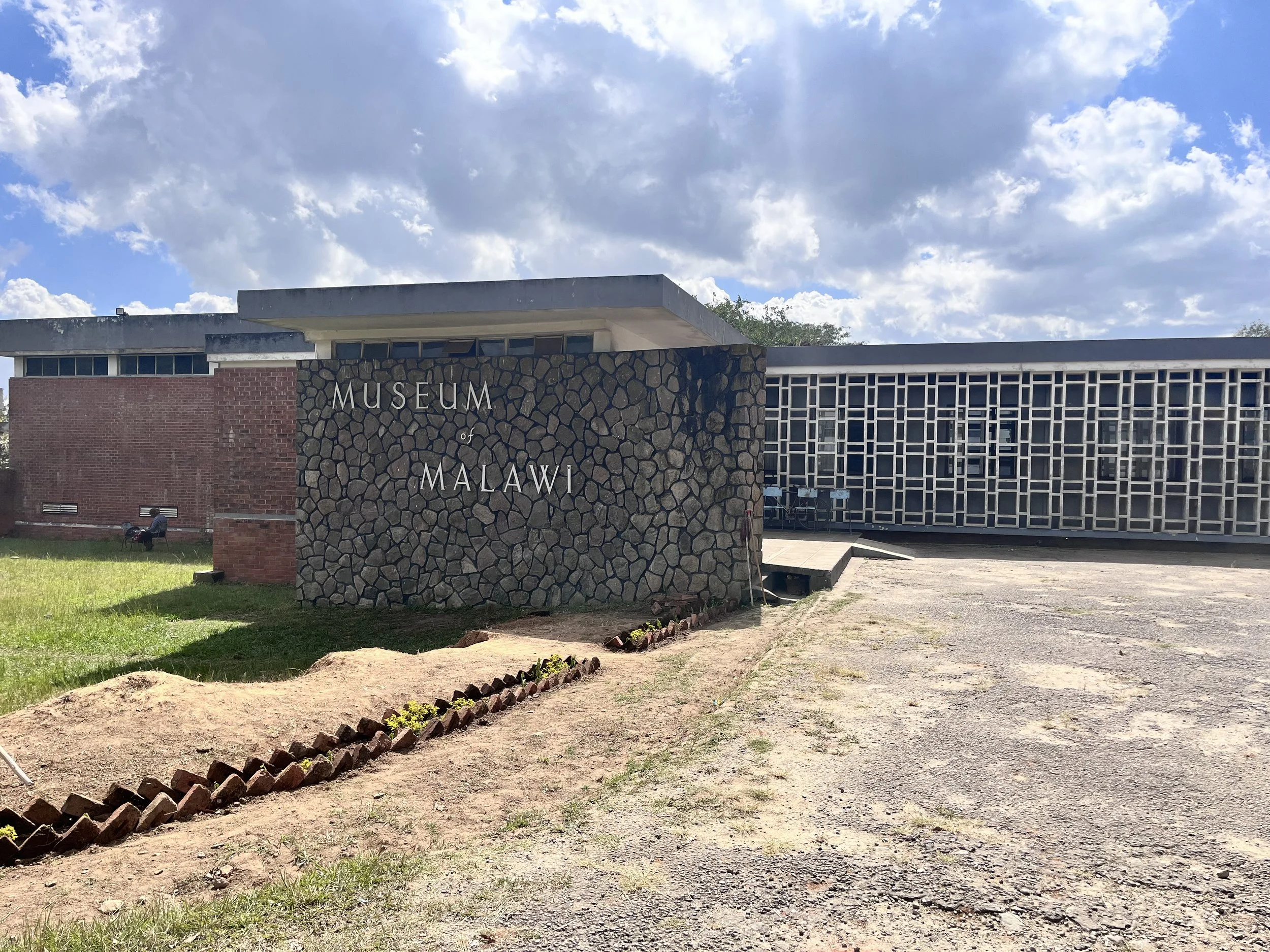
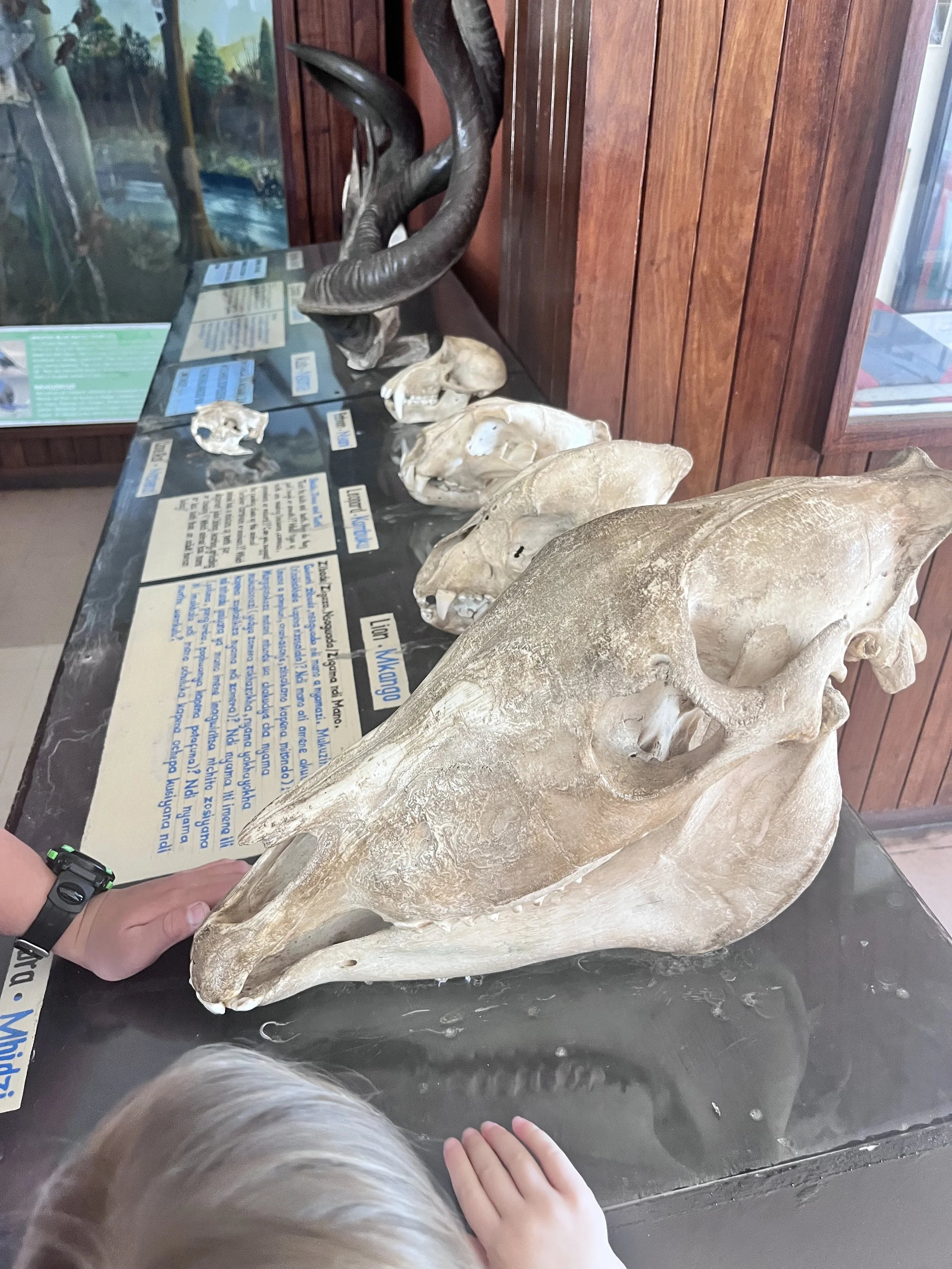
A zebra skull
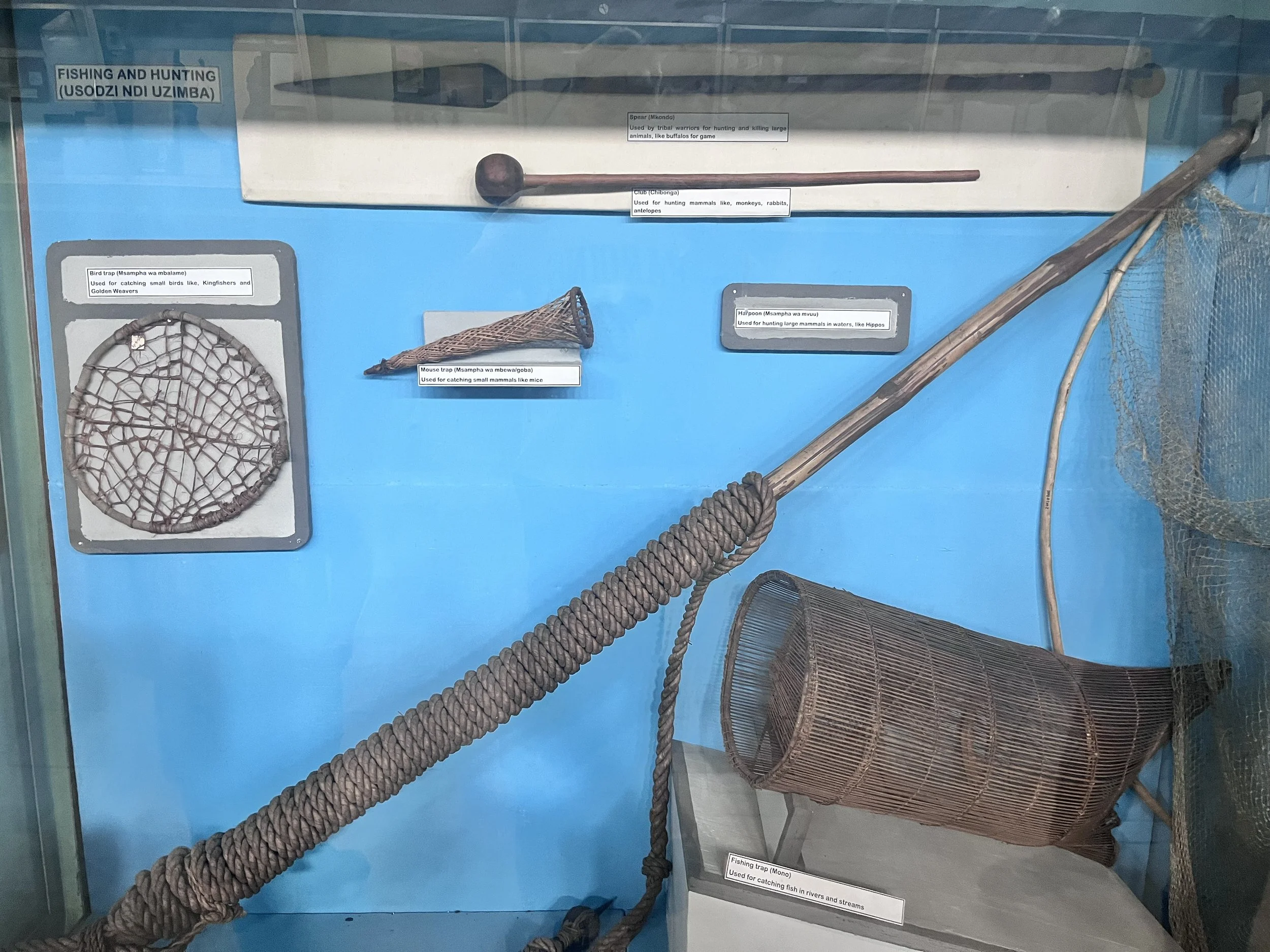
This pole in the middle was used to hunt hippos. Can you imagine!?
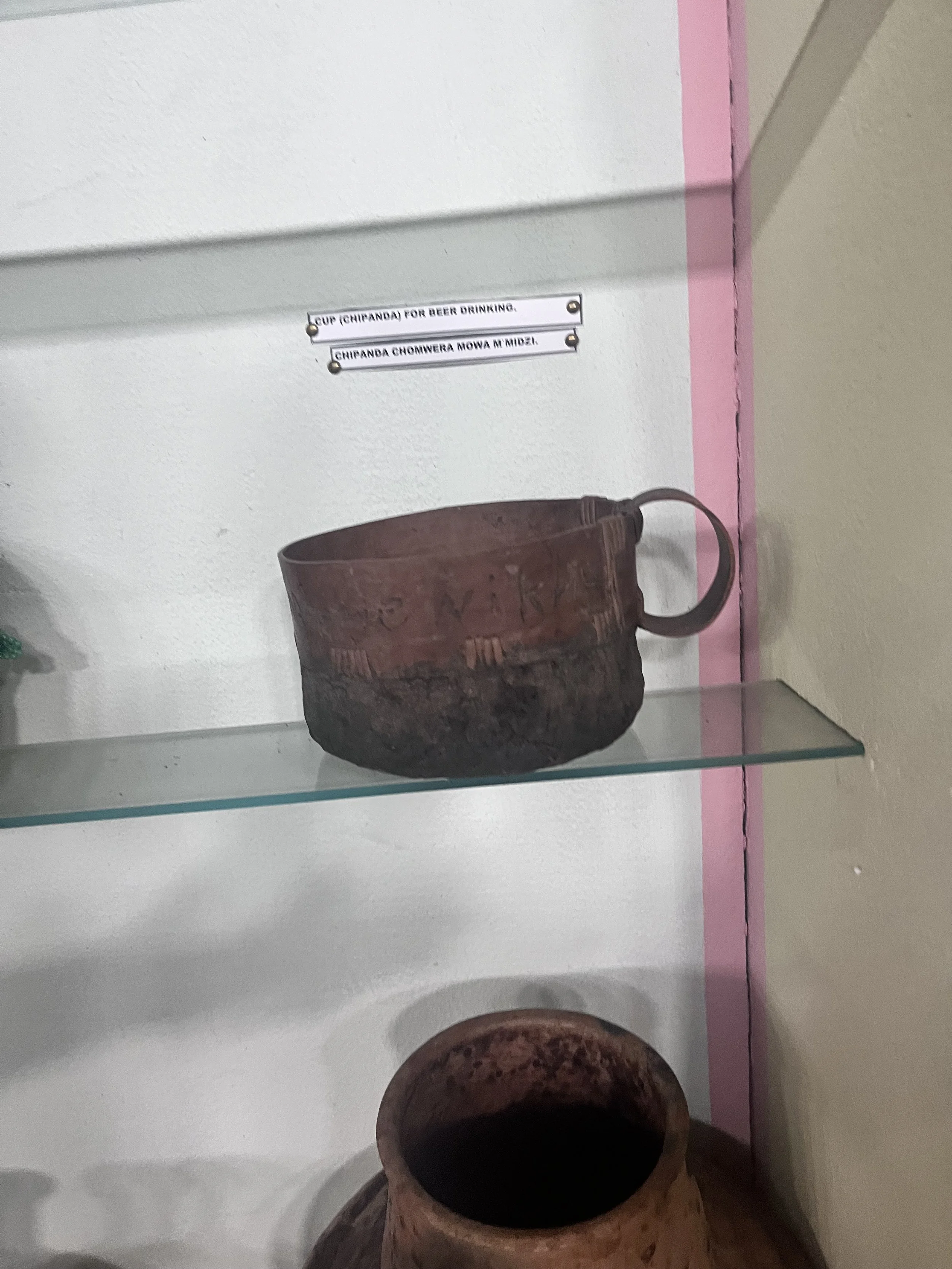
An ancient beer mug
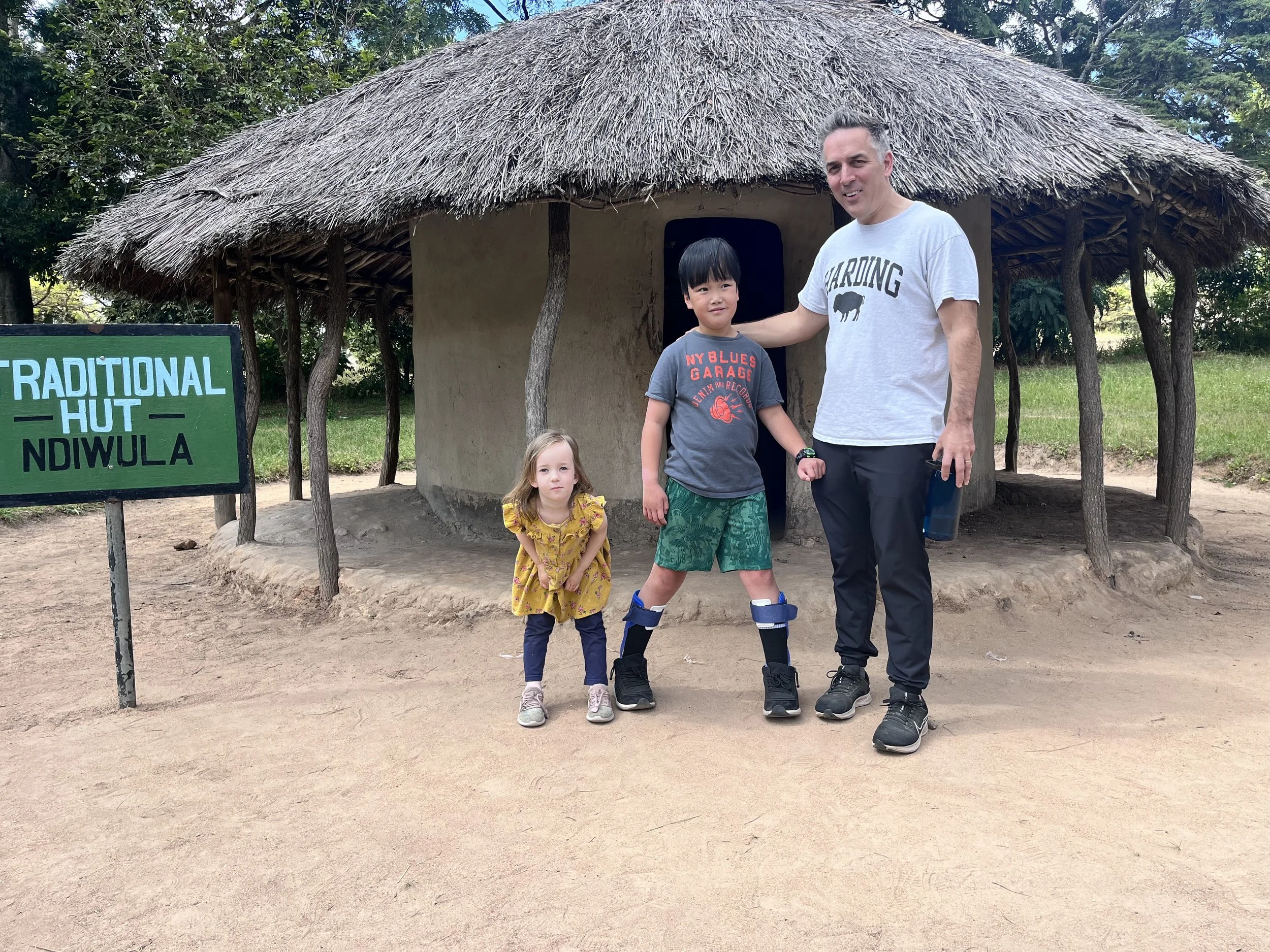
The best cultural learning is relational learning. Having the opportunity to speak with someone about their culture is no small matter these days. When we try to learn about a place outside of relationship the danger is always to reach for familiar, yet probably inaccurate, tropes.
We may conjure up two common images: one too bright, the other too bleak. It’s not just Africa I guess, we tend to have a strange mental pull towards these two extremes in a lot of areas. Reality of course is always more nuanced, mundane, and difficult to quickly classify.
Reality is not exactly what I had in mind.