Humor Theories and Theologies
Imagine a group of theologians, philosophers and neuroscientists walk into a bar. They’ve signed up for the town open mic. The bartender says “Hey what are you guys doing here?” They say “We’ve written extensively on the topic of comedy and are here to apply what we’ve learned!” In fact, they have debated laughter and comedy for thousands of years, forming several mainstream “theories of humor” and “theologies of laughter”.
The following is quick review of the theories and persons that have shaped how we view comedy through the years.
There is the superiority theory of Plato and Aristotle, where we laugh at something because we think we’re better than it. And while Plato saw laughter’s disarming power as dangerous to the stability of the state, Aristotle thought a few chuckles never hurt anybody, as long as they were done in moderation.
Alongside them is the so-called Incongruity Theory, first put forth by Immanuel Kant and Arthur Schopenhauer. These philosophers posited that laughter occurs when something doesn’t line up, when there is a contradiction between our words and actions, and reality. Put another way, and to quote a book I wrote about ten years ago “contradiction is the root of comedy” and comedians are looking for those places that don’t seem to fit.
Sigmund Freud popularized the Relief Theory, in his book Jokes and Their Relation to the Unconscious. Relief Theory conceptualizes jokes, humor and laughter as built up psychic energy which is released through non-violent, yet sometimes aggressive ways. Comedy fans will remember Bill Burr’s infamous 2006 “Philly Rant”, where he crudely castigates an unruly Philadelphia audience. It is all in good fun, the whole crowd laughs, but the aggressiveness is all too apparent.
The Social Bonding Theory of humor simply states that people build relational connections through laughing together. This is really not much different than singing hymns as a church community on a Sunday morning or collectively screaming at the refs after a blatant missed call at your local NBA arena. Laughter brings people together, and in attachment language signals safety and connection.
Then there is my personal favorite, the Benign-Violation Theory put forth by Peter McGraw at the Humor Research Lab (HuRL) at the University of Colorado. The theory suggests that “laughter and amusement result from violations that are simultaneously seen as benign.” Or perhaps put into the language of relational neuroscience: funny stuff has to be somewhat challenging, while still allowing us a degree of safety. Effective humor must stretch us, but cannot overwhelm us. Under this theory, if a joke is too offensive and severely violates the person’s sense of safety, the results will be disastrous. However, if a joke does not have any violating elements to it at all (that is to say, the joke does not possess a challenging, incongruous, or breaking of the perceived norms), then it will fall flat.
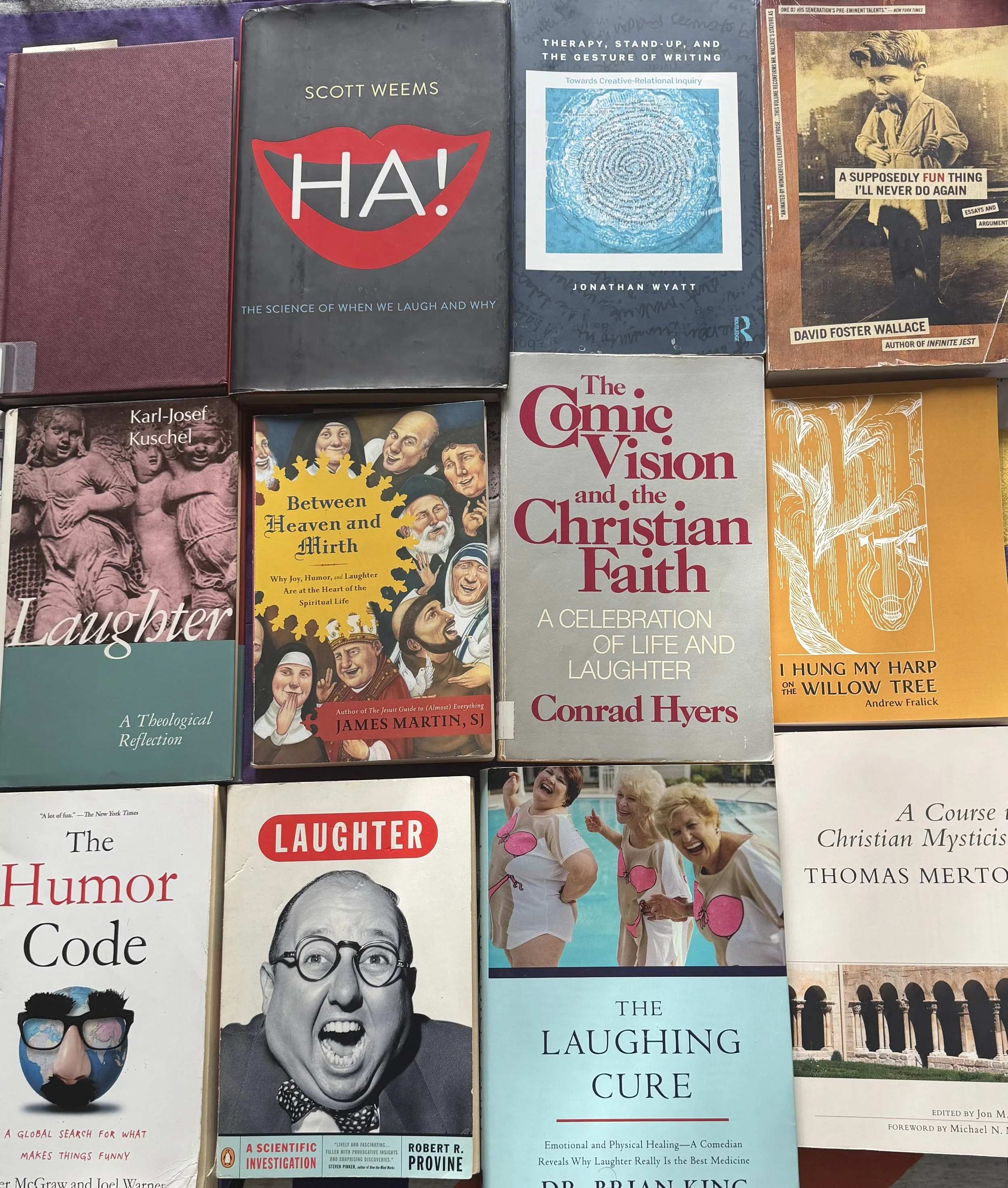
Amongst the theologians there are essentially four main groups with different beliefs about what is and isn’t funny. The first of these is “The Homers”, who laugh at anything and everything with no limitations. The laughs a joke gets are the only criteria for its value (think Kill Tony). Before Homer Simpson there was Homer the Greek, author of The Iliad, whose description of the homeric laughter of the gods sets the stage for how westerners will view laughter for several millenia. In The Iliad the Trojan War is raging and people are tragically dying everywhere, meanwhile the gods are throwing a party where they laugh at the misfortune of others and with easy frivolousness. In brief, and to quote a fellow comedian friend, “they’re laughing at EVERYTHING”.
If The Homers laugh at everything, the Chrysostom’s laugh at nothing. This group’s leader is fifth century Constantinople Bishop John Chrysostom who (in)famously said “Christ never laughed”. Why are they even at this open mic? Perhaps their wives dragged them out for the evening? In their defense, they were responding to a Christianity that had grown comfy, callous and dangerously reflected the oppressive values of the culture around it. Among their ranks are leading lights such as Tertullian, Basil, Ephrem the Syrian, Saint Augustine, Jerome, and Saint Benedict.
The Chrysostom’s have had an enormous influence on how the Church through thousands of years has approached comedic material, mostly in the negative. Responding to this group is another, more recent, group which I’ve labeled “The Mainliners”. The Mainliners want to rehabilitate laughter. They are reacting to the long tradition within the Church that sees laughter at best as silly and unserious, or at worst as sinful. They love to laugh within the boundaries of good taste. To varying degrees they do not take themselves or religion so seriously, but they also do not laugh heartlessly like the Homers. This group has essentially two main themes they emphasize: 1) They would say that laughter is a sign of joy and joy is an oft missing element of a healthy spiritual life. 2) They distinguish between two kinds of laughter, a healthy happy laughter and a mean mocking kind of laughing.
There is a fourth and final group of laughter theologians is who Bernard Schweitzer calls the “radical laughter theologians”. They do not laugh undiscerningly like The Homers, but they also aren’t shy about laughing at some of the seemingly “offensive” jokes that shock the Mainliners and horrify the Chrysostoms. From this group two large themes emerge: 1) Humor is impossible to sort into “positive” and “negative” categories and 2) Just because a joke offends does not necessarily mean it was wrong (and the inverse is true as well).
Think about these theories and groups:
As you read the summary of these four groups of laughter theology, which one seems to best fit how you view comedy?
Looking at the theories of humor put forth by philosophers and psychology researchers, which one resonates for you? What do you tend to find funny? Contradiction? Absurdity? Playfulness? Roasting others?
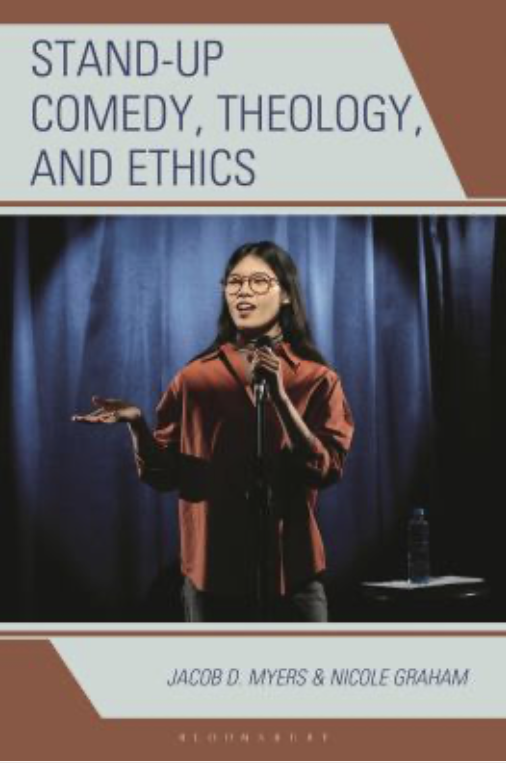
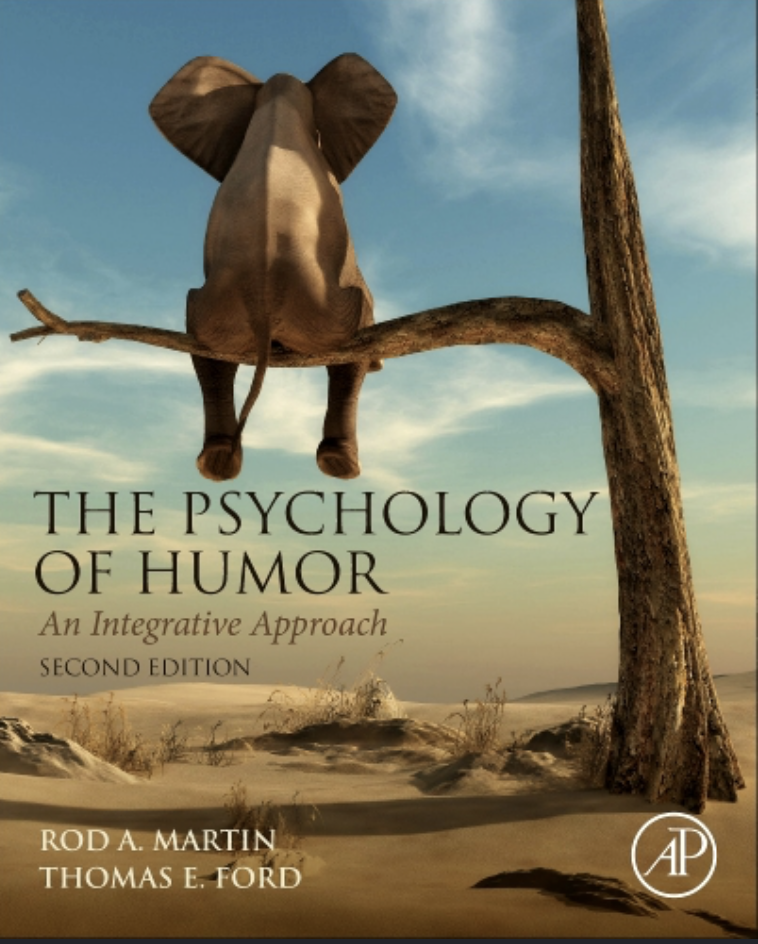
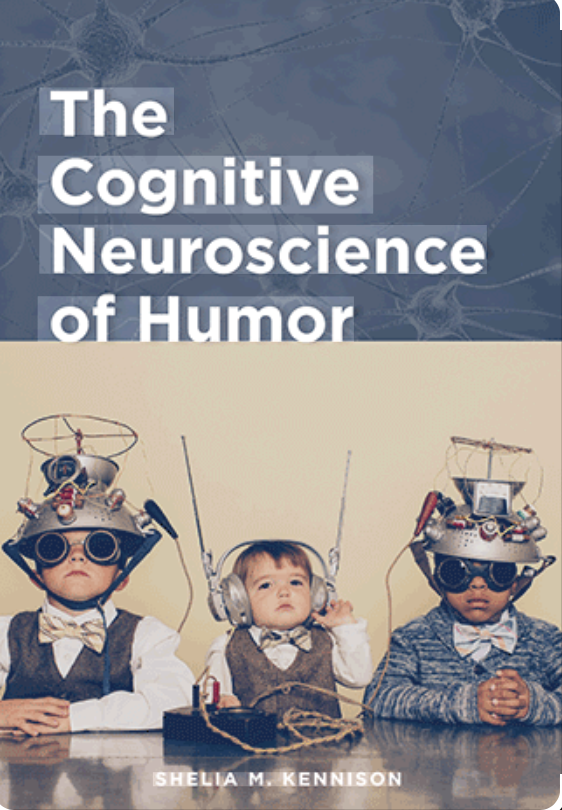
I am nearing the completion of my doctoral project on comedy and theology. In January I will defend my dissertation and late next spring you can all start calling me Dr. Drew.
About two years into this project I had a realization. Many of the books and articles I was reading started and ended similarly:
A group of theologians, philosophers and neuroscientists walk into a bar. They’ve signed up for the town open mic. The bartender says “Hey what are you guys doing here?” They say “We’ve written extensively on the topic of comedy and are here to apply what we’ve learned!” That’s the beginning of the book.
The book ends with the author bombing horribly at open mic because, let’s be fair, comedy is hard.
They are academics trying to practice the art of comedy and my doctoral project is sort of reverse engineering this process. Drawing on years of experience doing comedy I have written a piece of comedic/theological performance art that explores the APPLICATION of humor theories and laughter theologies. I want to see how this fits into what I’ve learned also how people will react in a live environment.
I will be putting on a few performances this fall and I would love for you to come watch. Below is the flyer for the show:
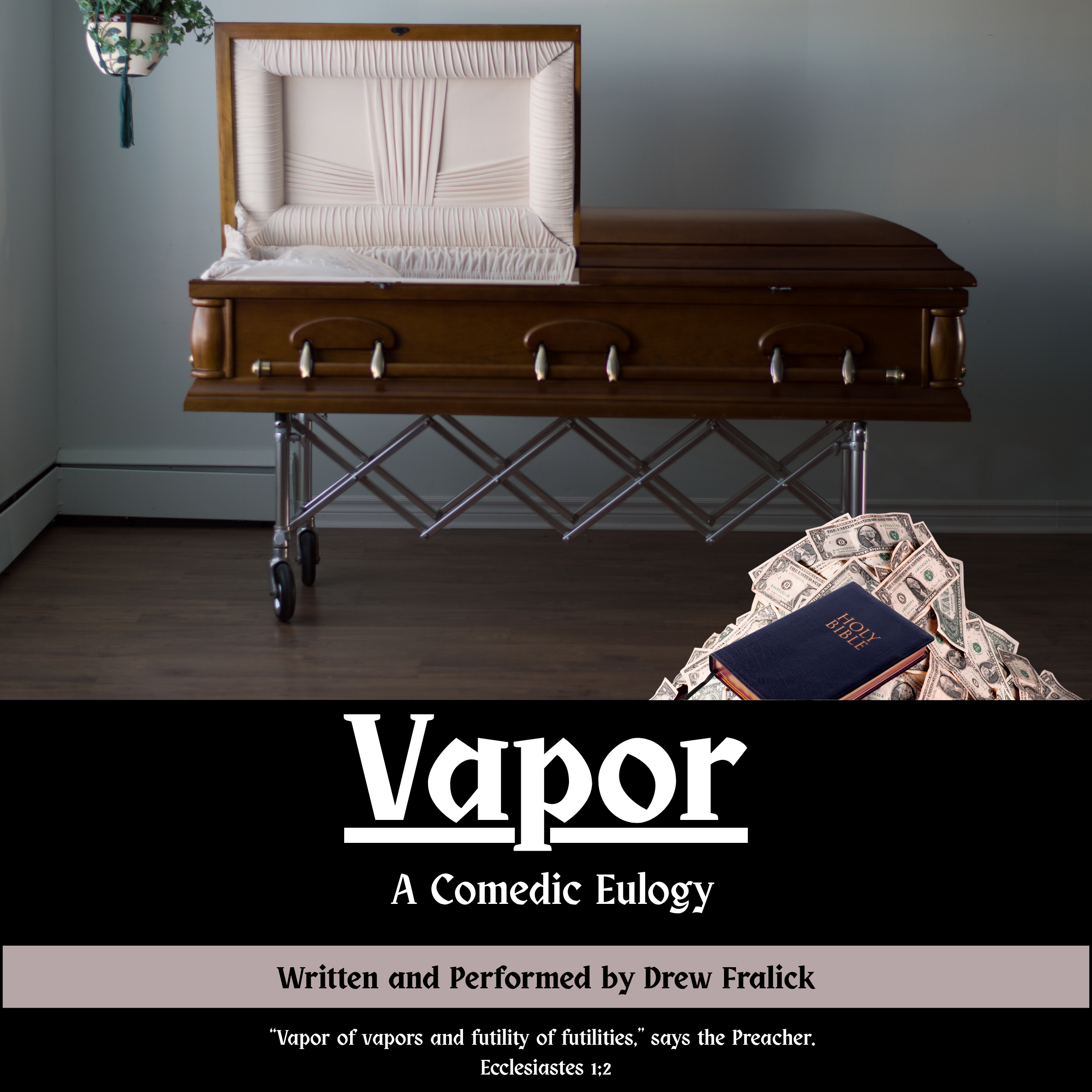
If you are in the Denver, Detroit, or Cleveland areas I would love for you to come out and participate in this event. It is free, but you need to RSVP to attend. (dates and locations are listed in the rsvp form)
It will be about a 2 hour event. Here’s what to expect:
- Arrive and take a questionnaire related to humor styles and religious beliefs
- Watch the performance piece I've written (it's about forty five minutes to an hour)
- Take a post show questionnaire related to humor and religion
- Q & A to finish along with refreshments
Look forward to seeing you there!
Drew